How do people risk their lives for hallucinogenic honey in Nepal?
01 Jan 1970We have prepared for you a shocking story about how people are forced to risk their lives for the sake of earning money. In eastern Nepal, representatives of one of the country's indigenous communities - Kulung weave bamboo rope ladders to climb them up the cliffs, where, risking their lives, they collect special honey.
They drive away clouds of angry bees with the smoke of smoldering grass, and this is essentially their only defense against the rather painful bites of numerous insects.
By the way, it's not ordinary honey and not ordinary bees make it. The Nepalese Apis laboriosa is the largest honey bee in the world, and on the slopes of the Himalayas, its nectar has hallucinogenic properties.
Collecting honey from Himalayan bees is quite dangerous. First, you need to get to the nest. It's located high in the rocks, and the road there is no less dangerous than the process of collecting honey. Secondly, the Himalayan bees are very poisonous.
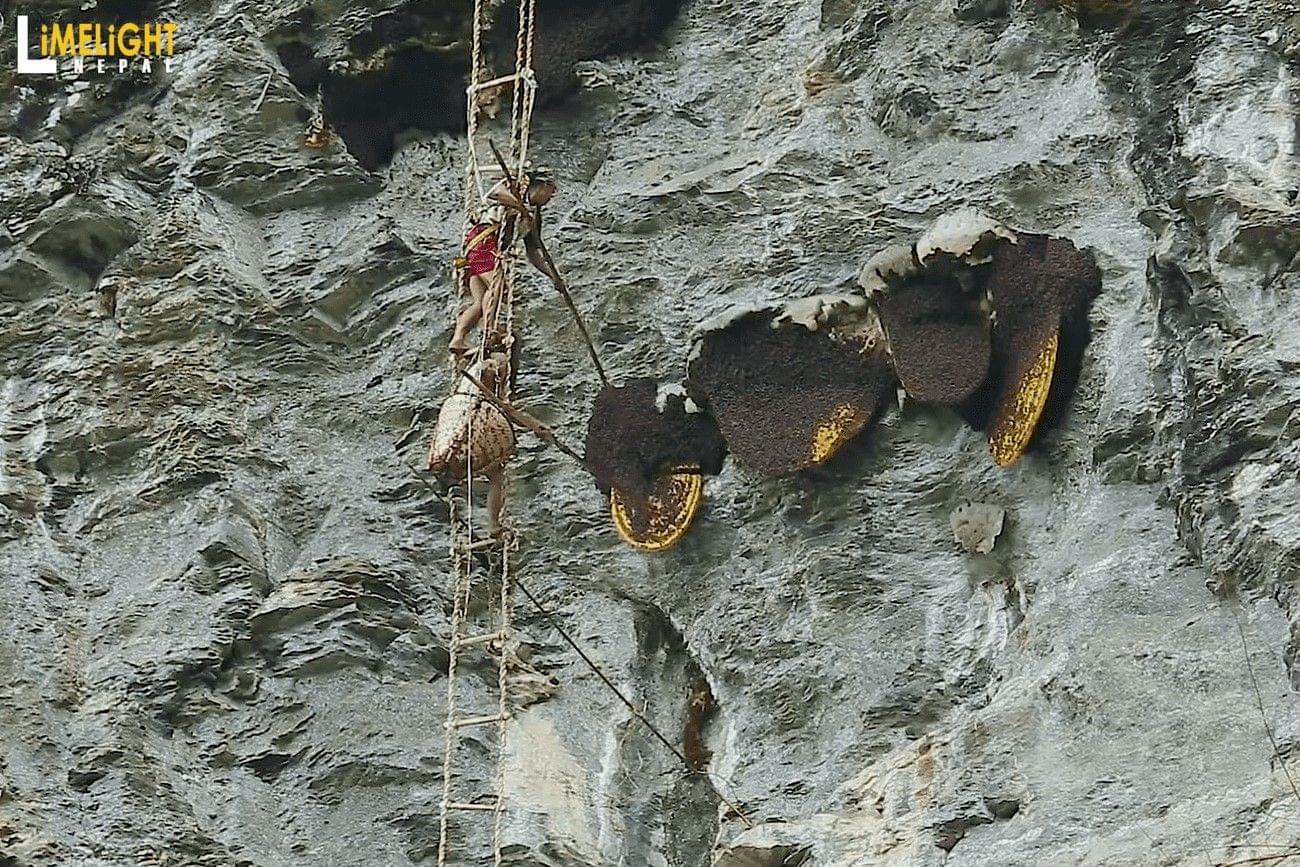 © Honey Hunting in Nepal | Hallucinogen Honey Hunters | Documentary / Limelight Nepal / YouTube.com
Honey is collected by hereditary collectors. They prepare for a trip to the mountains for a long time, a team of 10-12 people especially trains, climbing tall trees along vines and ropes. Immediately before leaving the village, a religious ceremony is held, a sheep, fruits, and cereals are sacrificed to the gods. Once upon a time, the ascent was not started without human sacrifice.
The camp was set up under a rock, then a fire was made near the nest to smoke out the bees. The beekeeper, dressed in a nettle shirt, climbed a ladder of bamboo to a rock, "armed" only with a bamboo pole and a sharp knife. It's very important to cut the comb so that the bees don't leave their habitat.
Why do people collect hallucinogenic honey, risking their lives? Now for the inhabitants of local villages, hunting for honey is the only way to earn the cash they need to buy what they cannot produce themselves. Such amazing stories are found in the world! However, the younger generation of men in Nepal don't want to risk their lives, and there is a huge risk that the art of harvesting red honey seasonally may be lost to Nepalese villagers forever.